
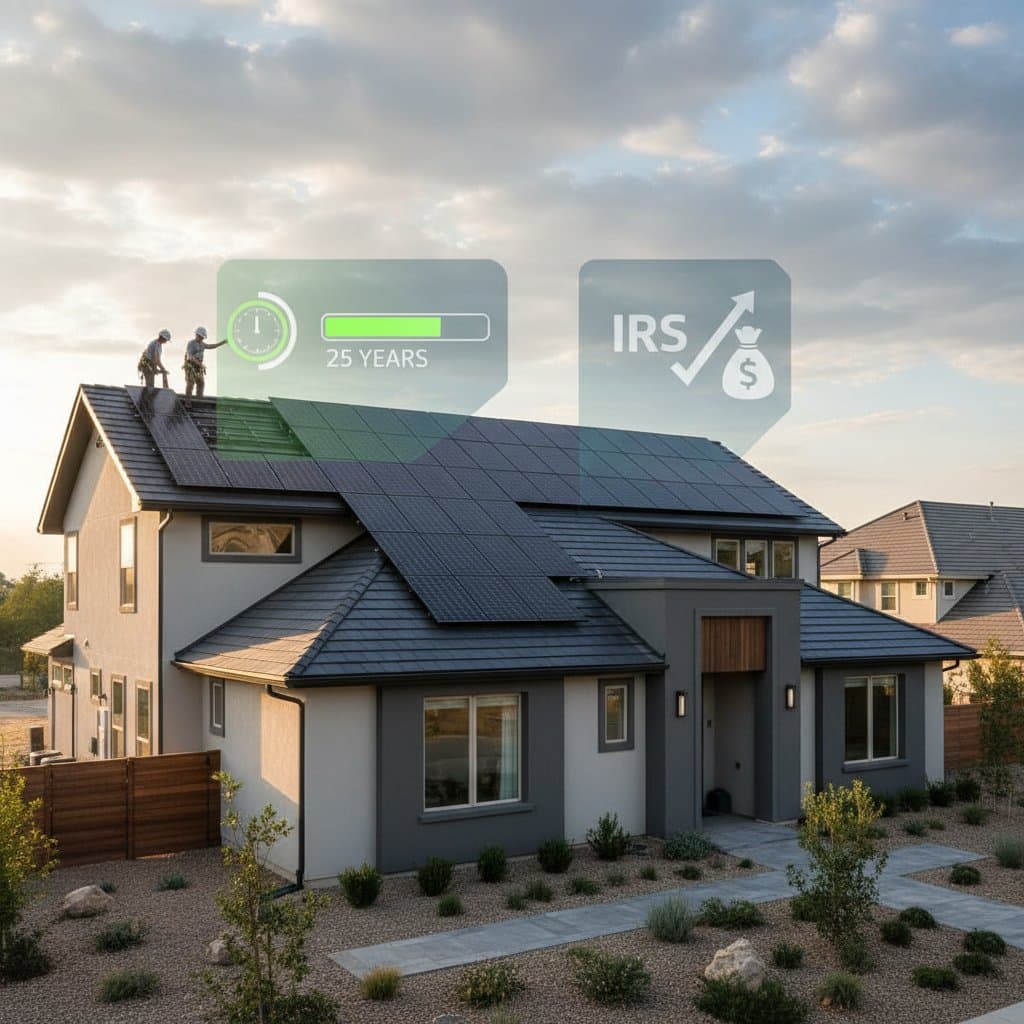
IRS Ties Solar Tax Credits to Roof Lifespan Starting in 2026
The Internal Revenue Service introduces a rule effective in 2026 that requires solar energy systems on residential and commercial rooftops to align with the roof's expected lifespan. This measure ensures federal tax credits support installations with lasting functional integrity throughout the depreciation or credit period. Industry experts project this change will influence over 3 gigawatts of annual rooftop solar capacity across the United States.
Federal Compliance Shifts Toward Durability Standards
The IRS updates redefine the eligible lifespan for systems under the Investment Tax Credit by tying photovoltaic equipment directly to the roof's rated service life. Solar arrays on new or replacement roofs must show a service expectancy that matches or exceeds the roof's duration. Taxpayers with existing structures need to prove the roof's remaining life equals or surpasses the solar system's projected operational period.
An IRS spokesperson explains that this adjustment addresses issues with early system removals during roof replacements before warranties expire. The spokesperson states, "We are ensuring that taxpayers claim credits for systems that are expected to remain in service for the full benefit period."
Impact on Installers and EPCs
Installation firms and engineering, procurement, and construction contractors face new verification obligations under the rule. Teams must submit roof inspection reports and manufacturer certifications on lifespans. These additions may extend administrative processes, especially for homes with aging roofs where conditions differ widely.
Michael Torres, CEO of SunMount Solar in Colorado, notes that compliance could alter project schedules. Torres comments, "Homeowners often decide to install solar before replacing the roof, but that sequence may no longer qualify for credit." He anticipates growth in combined roof-and-solar packages to meet requirements.
The National Roofing Contractors Association endorses the policy for synchronizing lifespans between roofing and solar trades. The association projects that matching new roofs with solar systems extends overall durability by about 25 years on average, which lowers replacement expenses and minimizes reinstallation hazards.
Manufacturers Prepare for Certification Adjustments
Producers of solar modules and mounting systems examine their warranty details and testing methods to align with the standard. Demand for roof-integrated options, like solar shingles and building-integrated photovoltaics, should rise since these solutions naturally share the roof's structural lifespan.
Traditional rack-mounted system makers investigate enhanced anchoring techniques and sealant options to boost water resistance and lessen roof degradation. Kelly Nguyen, product manager at MountTech Systems, indicates the rule will spur progress in robust hardware. Nguyen shares, "We are testing corrosion-resistant fasteners and low-penetration mounts that preserve roof integrity longer than current models."
Financial and Market Implications
This lifespan alignment may alter economics for residential and commercial projects alike. ClearGrid Research analysts forecast that linking roof replacements to solar setups adds 8 to 12 percent to overall costs. However, they highlight potential savings in long-term maintenance and higher property values from extended system life.
Lenders and tax equity investors monitor the development with interest. The IRS policy adds due diligence by requiring roof condition proof for credit eligibility. Financial entities might demand certification documents prior to funding solar loans or leases.
Preparing for the Compliance Deadline
Solar developers, contractors, and manufacturers plan to issue revised customer guides ahead of the 2026 deadline. Training initiatives will cover roof evaluation techniques, record-keeping standards, and integration strategies.
Trade groups have sought discussions with the Treasury Department on rollout details. The Solar Energy Industries Association backs the durability objective yet advocates for options in cases where immediate roof work proves challenging.
Advancing Integrated Solar-Roof Solutions
This regulation reflects a larger movement to harmonize building envelopes with renewable technologies. Regulators seek enduring setups that cut waste and enhance investment returns. For the U.S. solar sector, adaptation will favor firms offering unified roofing and solar expertise.
The policy positions solar as a core building element, not a short-term fixture, establishing standards for dependable, enduring performance that benefits homeowners, businesses, and the environment.