
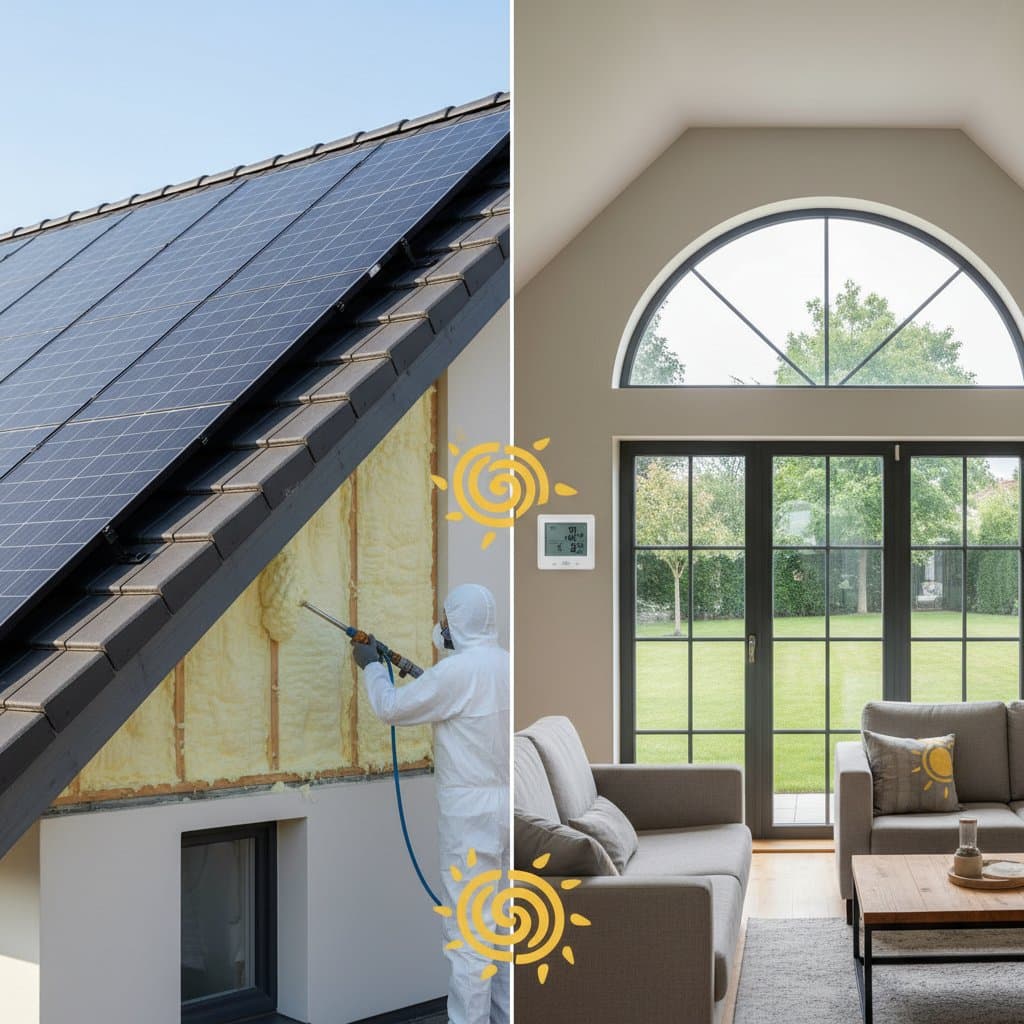
Why Installers Promote the $12K Solar Foam Bundle
The $12,000 solar foam package emerges as a prominent offering in residential energy enhancements. Solar installers nationwide pair rooftop solar systems with spray foam insulation, positioning the combination as a comprehensive efficiency upgrade rather than an isolated technology. The core sales message highlights simultaneous energy production and conservation. However, deeper factors include installer financial incentives, rebate frameworks, and evolving homeowner priorities shaped by the last ten years.
Origins of the Solar Foam Bundle
This combination arises from deliberate industry adaptation. Homeowners adopting solar often face persistent high bills during heating and cooling seasons. Solar systems offset grid electricity use, yet inadequate insulation sustains elevated thermal loads. Closed-cell spray foam excels by sealing air leaks and maintaining stable indoor temperatures, surpassing traditional materials like fiberglass or cellulose in performance.
Stricter energy building codes and advanced solar incentives created an opening for solar firms. Rather than defer efficiency tasks to HVAC specialists or remodelers, these companies introduced integrated energy packages encompassing generation and conservation. The $12K bundle gained traction as it aligned with standard financing caps and qualified for aggregated federal tax credits alongside state efficiency rebates.
Financial Incentives Driving the Bundle
Business considerations strongly favor this package. Competition in solar-only projects erodes profit margins through aggressive pricing. Incorporating spray foam redirects discussions from cost per watt to holistic energy outcomes.
Installers leverage their general contracting licenses to handle insulation labor, procure materials from regional suppliers, and embed costs within solar financing options. Homeowners thus incorporate the insulation into low-interest loans or leases designated for solar components. The $12K figure generally addresses attic and crawl space treatments in typical homes, yielding noticeable efficiency improvements without exceeding common loan thresholds.
Interviews with regional installers reveal that foam installation often yields margins nearly twice those of solar panels and inverters. A contractor in Texas reported this disparity, underscoring why many solar enterprises now maintain dedicated insulation teams or reliable subcontractors.
Technical Advantages of Combining Solar and Foam
A solid engineering rationale supports the integration. Solar panels diminish reliance on grid power, while insulation lowers the overall energy demand requiring offset. Together, they enable a 15 to 25 percent reduction in necessary solar capacity. Fewer panels result in less roof mounting and potentially decreased installation expenses.
The air-sealing properties of spray foam also moderate attic temperatures, benefiting rooftop solar efficiency. Panels function optimally at cooler temperatures, and reduced heat buildup in attics can modestly decrease roof surface heat during intense sun exposure. These effects accumulate to enhance system longevity and output.
Homeowners experience enhanced comfort as rooms maintain even temperatures, HVAC units operate with reduced frequency, and the solar system manages a more consistent load. This synergy yields quantifiable savings and resonates with preferences for comprehensive energy strategies over piecemeal solutions.
Marketing Tactics and Homeowner Appeal
The bundle's promotional strength derives from its streamlined presentation. Homeowners avoid managing separate contractors, financing arrangements, and rebate applications, as installers consolidate all elements into a single agreement. Such ease proves highly persuasive.
Promotions blend themes of energy autonomy and enhanced living quality. Solar alone evokes self-sufficiency, while foam addition connects to tangible home upgrades. This multifaceted messaging broadens appeal to eco-conscious individuals and those prioritizing functional improvements.
An underlying dynamic involves financing profiles. Solar prospects often qualify for loans between $20,000 and $40,000. The $12K insulation addition seldom alters approval status yet substantially elevates project revenue for installers. Homeowners perceive the purchase as a full-scale home enhancement rather than a mere equipment addition.
Performance Outcomes and Key Considerations
Effectiveness varies by home architecture and local weather patterns. In warm, moist areas, attic closed-cell foam sharply cuts air conditioning needs. Colder regions benefit from minimized heat escape and moisture buildup.
Optimal results hinge on precise application. Improper mixing or placement risks moisture problems, and cured foam proves challenging and costly to remove. Established solar providers thus collaborate with certified insulation experts or develop in-house expertise.
Reporting indicates superior outcomes occur when installers treat solar and foam as interconnected components of an energy framework. Sizing solar arrays according to modeled post-insulation usage ensures precise savings projections and elevates homeowner approval.
Advancing Comprehensive Home Energy Strategies
The $12K solar foam bundle illustrates an industry pivot toward unified residential energy approaches. Future developments will interconnect solar, insulation, HVAC, and storage into cohesive packages.
Installers gain customer retention and opportunities for follow-on services through this model. Homeowners secure dependable energy management paired with comfort advantages. Scaling these offerings demands vigilant quality oversight to sustain benefits.