
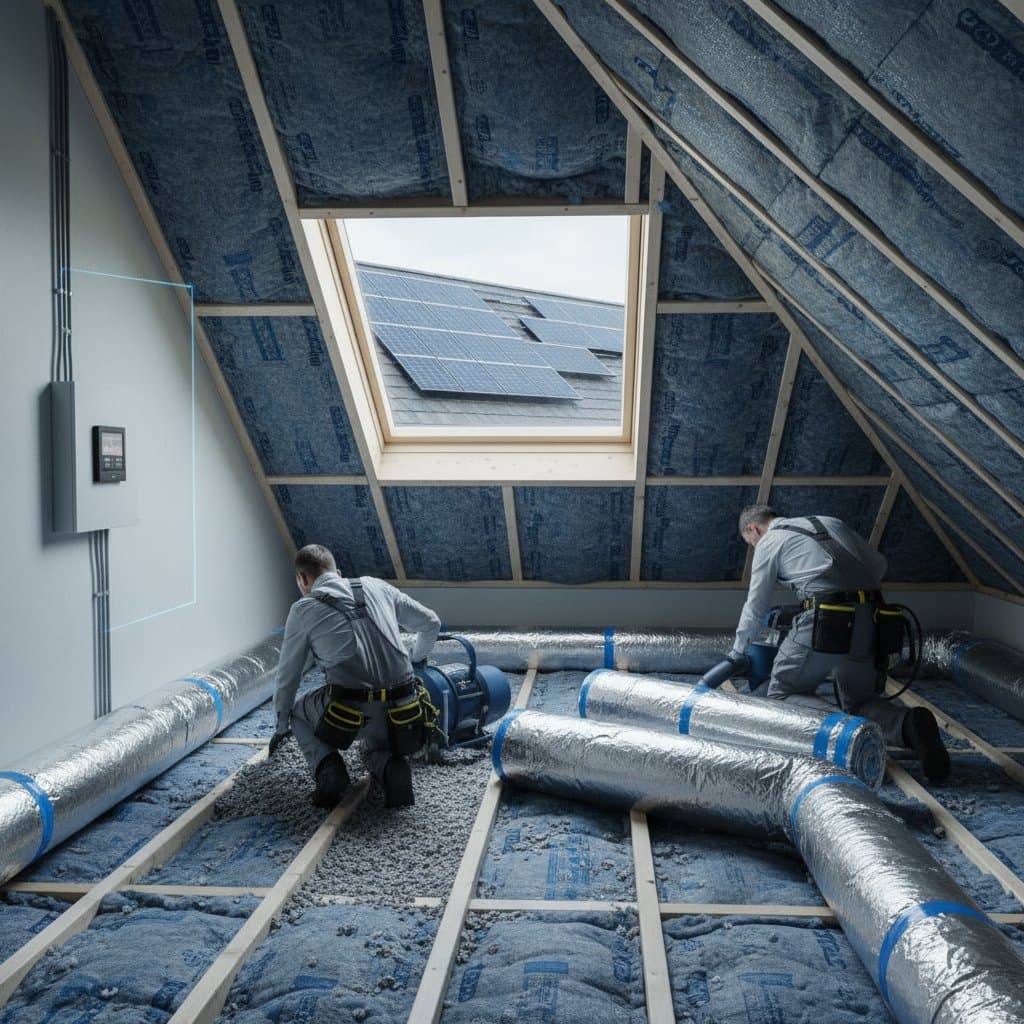
Insulating the Attic First Enhances Solar Performance
Homeowners preparing for solar installations often overlook the attic's role. Focus typically falls on panels, inverters, and funding, yet the space above the living areas profoundly influences system effectiveness over time. That concealed area behind a simple access panel can determine the success of a solar setup.
Energy professionals across the United States have observed a clear trend in residential projects. Properties that receive attic insulation upgrades before panel installation demonstrate superior energy efficiency, reduced consumption, and quicker return on investment. The link between attic conditions and solar output proves stronger than many expect.
The Critical Role of the Attic in Energy Management
Energy loss in homes frequently originates in the attic. In structures built decades ago, insulation settles or deteriorates, creating voids that permit conditioned air to escape. The roof captures sunlight all day, transforming the attic into an intense heat source. Without adequate barriers, this warmth infiltrates lower levels, compelling cooling systems to operate more frequently and intensely.
Solar panels enter the equation and amplify these issues. The system offsets electricity bills, but persistent leaks mean greater power demands overall. Consequently, the panels compensate for avoidable waste instead of efficiently supplying the household.
Technical Integration of Insulation and Solar Systems
Solar panels offer minor shading to the roof, which limits heat buildup to a small degree. Proper attic insulation, however, delivers far greater savings by impeding heat movement from the roof to interior spaces. Materials such as blown-in cellulose, fiberglass batts, or spray foam establish this barrier effectively.
Paired with solar arrays, these elements form a comprehensive energy shield. Building science experts recommend tackling insulation upgrades ahead of panel mounting. The logic rests on reduced baseline energy needs, which allow for a downsized solar array to meet offset goals. Homeowners might eliminate two to four panels, cutting installation expenses by $5,000 to $10,000 depending on local pricing and system scale.
Insights from On-Site Energy Assessments
Field reports from energy auditors reveal tangible outcomes following insulation enhancements. Upgraded attics in various climates experience cooling demands decrease by 20 to 30 percent. Subsequent solar additions in these homes achieve payback in five to seven years, compared to eight to ten without prior improvements.
One consultant shared a direct perspective: “Solar panels generate power, but insulation prevents waste. If you skip the second, the first ends up working overtime.” This insight resonates widely among professionals in the field.
Essential Preparatory Actions for Attic Optimization
Prospective solar adopters should prioritize attic evaluation. Follow these steps to prepare effectively:
- Conduct a professional energy audit. Experts pinpoint air infiltration, insulation deficiencies, and airflow problems using tools like blower doors and infrared cameras.
- Evaluate insulation levels and materials. Aim for R-values of 38 to 60 in most U.S. regions; older homes often fall short at R-19 or less. Select durable options like dense-pack cellulose for lasting results.
- Address air sealing meticulously. Target penetrations near recessed lights, ductwork, and recessed chimneys with caulk, foam, or rigid barriers to eliminate drafts.
- Assess and improve ventilation. Install ridge vents, soffit intakes, or powered fans to expel hot air, preventing the attic from radiating excess heat indoors.
- Consult solar professionals early. Inform installers of insulation plans to refine system sizing, output projections, and incentive eligibility.
Sustained Advantages in Comfort and Energy Use
A fortified attic yields benefits that surpass solar integration. Summers bring cooler interiors, winters provide better warmth retention, and temperature fluctuations diminish. Heating and cooling units cycle less, extending equipment life and lowering maintenance needs.
For solar owners, this foundation amplifies each kilowatt-hour generated. The investment in clean energy gains full potential without competing against hidden inefficiencies.
Optimizing Your Solar Project from the Foundation Up
Effective solar initiatives inspect the home's interior before the exterior. Attic insulation establishes harmony across the entire energy profile, turning a routine installation into a high-performing asset. Begin your planning with a thorough attic review to unlock these integrated advantages.