
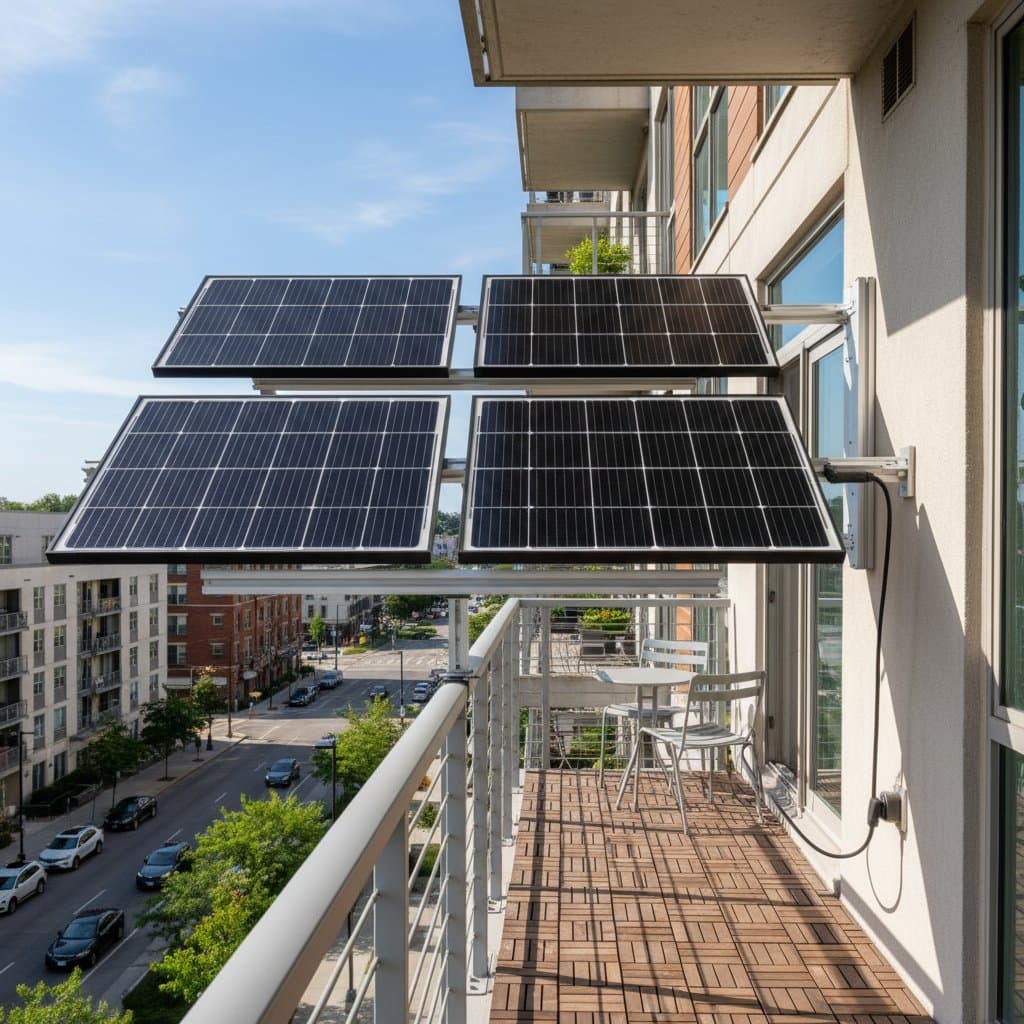
Unlocking Balcony Solar: The New 2000W Limit Boosts Urban Energy Access
The updated 2000W plug-in solar limit transforms the landscape for small-scale solar in the United States. This change opens opportunities for straightforward balcony-mounted systems that serve apartments and city residences. Regulators have raised the permissible output for plug-in setups, almost doubling the prior restriction. Experts project this adjustment will contribute hundreds of megawatts to distributed energy generation across the country.
Urban residents, including renters and owners of modest properties, now face fewer obstacles to adopting solar power. Systems up to 2000W provide substantial savings on electricity bills while adhering to plug-in rules that bypass intricate approvals or expert setup in numerous states.
Origins of the Plug-in Policy Update
This 2000W benchmark emerges from joint efforts by regulators, safety organizations, and solar industry groups. Earlier plug-in options, capped near 800W, suited only minor device support. The revision acknowledges progress in inverter safeguards, electronic components, and grid safeguards, rendering larger consumer-led installations feasible.
The Solar Energy Manufacturers Association reports that this step may triple energy production from user-assembled systems in shared housing. Laura Kim, policy director at the association, states, "It modernizes the rules to match the technology. The hardware has outpaced the code for years. This adjustment brings them into alignment and allows more households to benefit."
Key Technical Specifications and System Fit
Contemporary balcony solar packages incorporate microinverters or compact string inverters approved for outlet-based grid ties. Reaching 2000W typically involves two panels, each rated 400W to 500W, equipped with inherent efficiency enhancers.
Safety elements include grid-failure auto-disconnect, islanding prevention, and output caps. Producers have refreshed offerings to align with the elevated limits. Enphase Energy, a U.S. inverter provider, notes its adaptable microinverters support the increase without physical alterations. Brian Ross, senior product engineer at Enphase, explains, "The 2000W limit fits our existing architecture. It allows customers to connect more panels safely without changing the electrical footprint."
Streamlined Setup Process
Balcony solar designs minimize the need for certified electricians. Secure frames to railings, patios, or walls with durable aluminum supports and weatherproof hardware. Kits often feature variable angles to optimize sunlight capture on various orientations.
After mounting, attach the cable to a protected outdoor outlet connected to a home circuit. The inverter aligns with the grid to supply power inward. Monitoring tools via Wi-Fi display real-time output and savings totals.
Users should confirm wiring capacity for the added input, but overload concerns remain low since generation offsets consumption rather than increases it. Thomas Levine, chief technical officer at SolMate Systems, a plug-in solar specialist, compares it to, "a small appliance that runs backward. The energy flows into your home first, offsetting what you would normally buy from the utility."
Projected Market Expansion and Opportunities
Balcony solar occupies a specialized U.S. niche, led by European brands and users in costly power zones. The 2000W expansion draws American makers and sellers to the easy-setup niche. CleanTech Research Group forecasts over 150 percent growth in plug-in sales within two years post-rule.
Stores gear up for broader selections. Major retailers and e-commerce sites offer kits from $900 to $1,800, varying by scale and options. Without setup fees, these outpace roof-based alternatives needing approvals and labor.
Erin McCarthy, vice president of product strategy at SunPort Energy in California, observes, "Consumers want energy independence but not everyone can install rooftop solar. Balcony systems provide a flexible alternative that fits renters and small property owners. The jump to 2000W makes it financially meaningful."
Enhanced Safety Standards and Utility Alignment
Elevated limits demand rigorous manufacturer adherence. Devices require UL 1741 certification for grid-tied inverters and validation from accredited labs. Utilities offer measured endorsement, stressing uniform equipment and connector norms.
Certain states mandate utility alerts for connected plug-ins, despite skipping full applications. Engineers assess impacts on local grid steadiness. Jerome Peters, distribution planning manager at MidWest Electric Cooperative, cautions, "At 2000W per unit, the aggregate effect becomes measurable. We support customer generation, but we need to track adoption rates to ensure grid reliability."
Evolving Production and Logistics
U.S. firms gear up for balcony solar with locally produced panels and inverters. The update aligns with investments in facilities for compact, urban-suited modules. Companies plan balcony-tailored mounts handling wiring, water runoff, and scalability.
Demand rises for fittings, cables, and controls. Software for tracking and apps for energy oversight also proliferate. Michael Torres, senior analyst at EnergyTech Insights, predicts, "This segment will create new opportunities across the value chain. From aluminum extruders to IoT developers, everyone in the ecosystem will benefit from the increased wattage limit."
Balcony Power in Multifamily Settings
These systems suit apartment users unable to alter roofs or panels. Managers consider group outlets or unified metering for tenant independence sans major rewiring. Trials in crowded cities test building-wide aggregation via intelligent meters.
This setup mirrors small community solar, with resident outputs reducing shared loads. Regulators evaluate integration with net metering. The 2000W scale enables viability in large complexes.
Pathways to Widespread City Integration
Raising the plug-in solar cap to 2000W marks a key advance in consumer energy distribution. It eases entry for non-owners, speeds modest uptake, and broadens solar beyond roofs.
Suppliers rush compliant packages, providers streamline rules, and users gain renewable entry. As options multiply and knowledge grows, balcony solar may normalize in cities, converting apartments to efficient generators.
For American solar, this elevates reach and adaptability. The 2000W threshold redefines home renewables, spanning locations from balconies to patios, users from owners to tenants, and methods from complex builds to plug-and-play ease.