
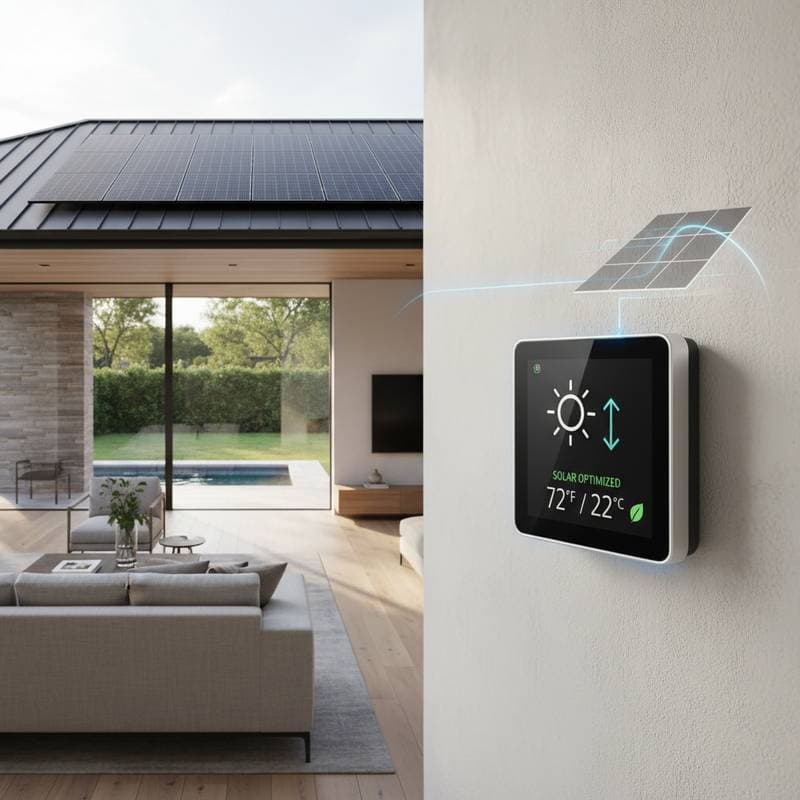
Solar Panels and Smart Thermostats: A $200 Monthly Savings Strategy
Numerous homeowners across the United States report monthly savings reaching $200 by integrating rooftop solar panels with smart thermostats that optimize energy consumption automatically. This pairing of solar energy generation and intelligent climate control yields significant decreases in electricity expenses and grid usage, alongside improvements in comfort and system performance.
The Mechanics of Energy Optimization
The core concept is simple yet effective. Photovoltaic systems produce electricity primarily during daylight, while smart thermostats adjust heating and cooling operations to align with these peak production times. For instance, when solar output is strong, the thermostat initiates pre-cooling or pre-heating to build up thermal reserves in the home for evening use. In periods of lower solar generation, it fine-tunes temperature settings to limit draws from the utility grid.
Data from leading U.S. energy analytics companies indicate that households using both technologies experience grid power consumption drops of 25 to 35 percent. For families facing monthly bills between $300 and $400, this equates to roughly $200 in direct savings.
Market Trends and Manufacturer Innovations
Leading manufacturers respond swiftly to this trend. Brands such as ecobee, Google Nest, and Honeywell Home now incorporate solar compatibility features that enable direct communication with solar inverters or comprehensive home energy platforms. These capabilities allow the thermostat to access real-time generation information and modulate heating, ventilation, and air conditioning accordingly.
"Energy automation emerges as a critical element in the value proposition of residential solar," states Laura Chen, Vice President of Product Strategy at SolarEdge Technologies in California. "Consumers seek outcomes beyond mere cost reductions. They desire systems capable of independent decision-making based on energy production and dynamic pricing."
Solar installation companies increasingly provide bundled solutions encompassing both photovoltaic arrays and smart thermostats. Professionals note that clients view these packages as investments with strong returns, especially in regions with time-of-use pricing. In such systems, rates may increase threefold during high-demand periods, making automated energy shifting a clear financial advantage.
Seamless Technical Setup
Integration between solar panels and smart thermostats often occurs through a central home energy hub or inverter data stream. These components relay production details to the thermostat, which employs forecasting algorithms to plan heating and cooling cycles. Contemporary setups avoid the need for modifications to existing ductwork or compressors, simplifying the process for qualified solar and HVAC specialists.
Certain providers experiment with enhanced approaches, including connections to battery storage. In these configurations, the thermostat prioritizes battery power during high-cost grid times, amplifying overall savings. Standards like OpenADR and Matter support fluid interactions among devices from various brands.
"Achieving interoperability presents the primary hurdle," explains David Ruiz, Senior Engineer at SunPower Corp. "Residential setups vary widely, encompassing diverse inverters and network hardware. Ensuring flawless data exchange across these elements defines the effectiveness of hybrid installations."
Broader Economic and Regulatory Impacts
Experts in energy analysis interpret the rise of solar-thermostat combinations as evidence of evolving distributed energy intelligence. Individual homes function as autonomous energy coordinators, reacting to market signals and supply fluctuations without manual oversight. This development assists utilities in alleviating peak-hour pressures and postponing expensive grid expansions.
Government incentives at federal and state levels further promote these integrations. Tax rebates for solar systems and efficient home appliances lower the entry barriers for combined purchases. Projections from Wood Mackenzie suggest that by decade's end, over 50 percent of new residential solar projects will incorporate at least one smart energy management tool.
Steps to Implement and Maximize Benefits
Homeowners start by assessing compatibility among their solar inverter, thermostat, and Wi-Fi infrastructure to enable data sharing. Select devices adhering to universal protocols, confirm interoperability prior to purchase, and program time-of-use preferences via the thermostat's app.
This fusion of solar power and smart climate regulation solidifies as a benchmark in home energy solutions. As technologies evolve, typical households stand to gain reliable monthly reductions in costs, diminished grid reliance, and consistent year-round comfort.