
HELOCs Versus Solar Loans: The Edge in Current Rates
Homeowners considering solar panel installations must choose between a home equity line of credit (HELOC) and a specialized solar loan. These financing methods allow systems to be installed without draining savings. Recent market shifts, however, position HELOCs as the more compelling option for those prioritizing cost savings and adaptability.
Understanding HELOCs for Solar Financing
A HELOC functions as a revolving credit line backed by home equity. Lenders permit borrowing up to 80 percent to 85 percent of the home's appraised value after subtracting the outstanding mortgage. Borrowers access funds incrementally, paying interest only on the drawn amount.
This setup suits solar projects well. Individuals can fund initial panels and later draw more for batteries or expansions. Secured by real estate, HELOCs secure lower rates than unsecured alternatives, reducing overall expenses.
Key Features of Solar Loans
Solar loans target the complete expense of purchasing and installing photovoltaic systems. Providers include banks, credit unions, and solar specialists. Repayment occurs via consistent monthly installments over a fixed period, with security limited to the equipment.
Such loans streamline the process and broaden access to solar energy. Higher rates reflect the elevated risk to lenders, as collateral depreciates. Additional costs, like dealer fees embedded in the rate, elevate the true borrowing expense.
Comparing Interest Rates
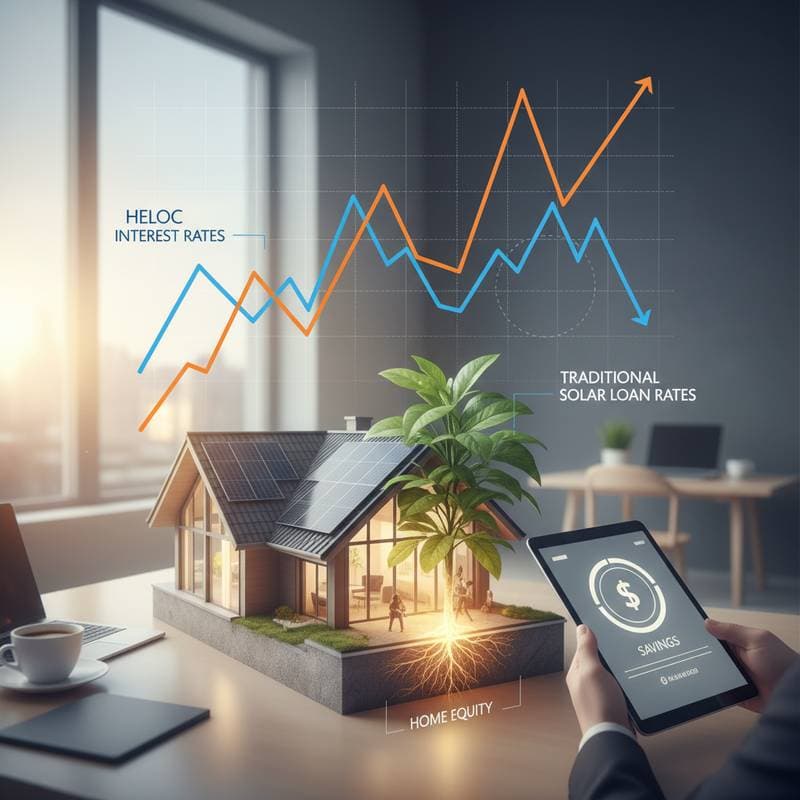
Interest rates highlight the primary distinction. Home equity collateral lowers lender risk, enabling HELOC rates several points below those of solar loans. Qualified borrowers with excellent credit realize meaningful reductions in total interest over the loan's duration.
Promotional solar loan rates may appear appealing initially. These often rely on temporary deals or dealer involvement. Post-promotion, costs climb, frequently exceeding variable HELOC rates, particularly when fees and markups apply.
Advantages in Flexibility and Repayments
HELOCs excel in versatility. During the draw phase, multiple withdrawals occur without restrictions. Interest-only payments or early principal reductions proceed penalty-free, accommodating phased solar developments like subsequent storage additions.
Solar loans enforce single disbursements and rigid schedules. This structure offers certainty but restricts modifications amid changing finances. Linked to equity, HELOCs adjust seamlessly to varying project scopes and schedules.
Navigating Tax Implications
HELOC interest for home enhancements, such as solar setups, may qualify for deductions under mortgage interest rules. Proper documentation ensures the funds enhance property value, lowering net costs. Solar loans rarely access this deduction, though the federal investment tax credit applies to system expenses.
Consult a tax advisor to verify qualifications based on usage and records. Pairing HELOC deductions with solar credits amplifies savings at purchase and tax time.
Weighing Risks and Security
HELOCs pledge the home as collateral, introducing foreclosure risk upon default. Responsible borrowers rarely encounter issues with steady income. Solar loans avoid property liens, securing only the panels, yet their steeper rates and inflexibility diminish this benefit for reliable payers.
Variable HELOC rates, indexed to prime rates, may increase. Even so, they generally stay below fixed solar alternatives. Select lenders provide fixed-rate locks on portions of the balance for added stability.
Steps for Solar Shoppers to Apply HELOCs
Creditworthy homeowners with ample equity find HELOCs the most economical route to solar adoption. Leverage property value to cut financing charges while retaining options for ongoing improvements.
To proceed, appraise equity by deducting mortgage debt from 80 percent of home value. Obtain quotes from multiple lenders, scrutinizing total costs like closing fees and rate caps. Compare against solar loan terms, factoring in all charges for a comprehensive view.
Optimizing Equity for Solar Investments
Harnessing home equity funds solar projects efficiently for many owners. Secure reduced rates, preserve borrowing options, and tap tax relief to enhance the financing process over dedicated solar products.
Assess equity availability, discuss HELOC availability with providers, and project interest under each scenario. Thoughtful evaluation transforms solar commitment into a strategic, cost-effective move.