
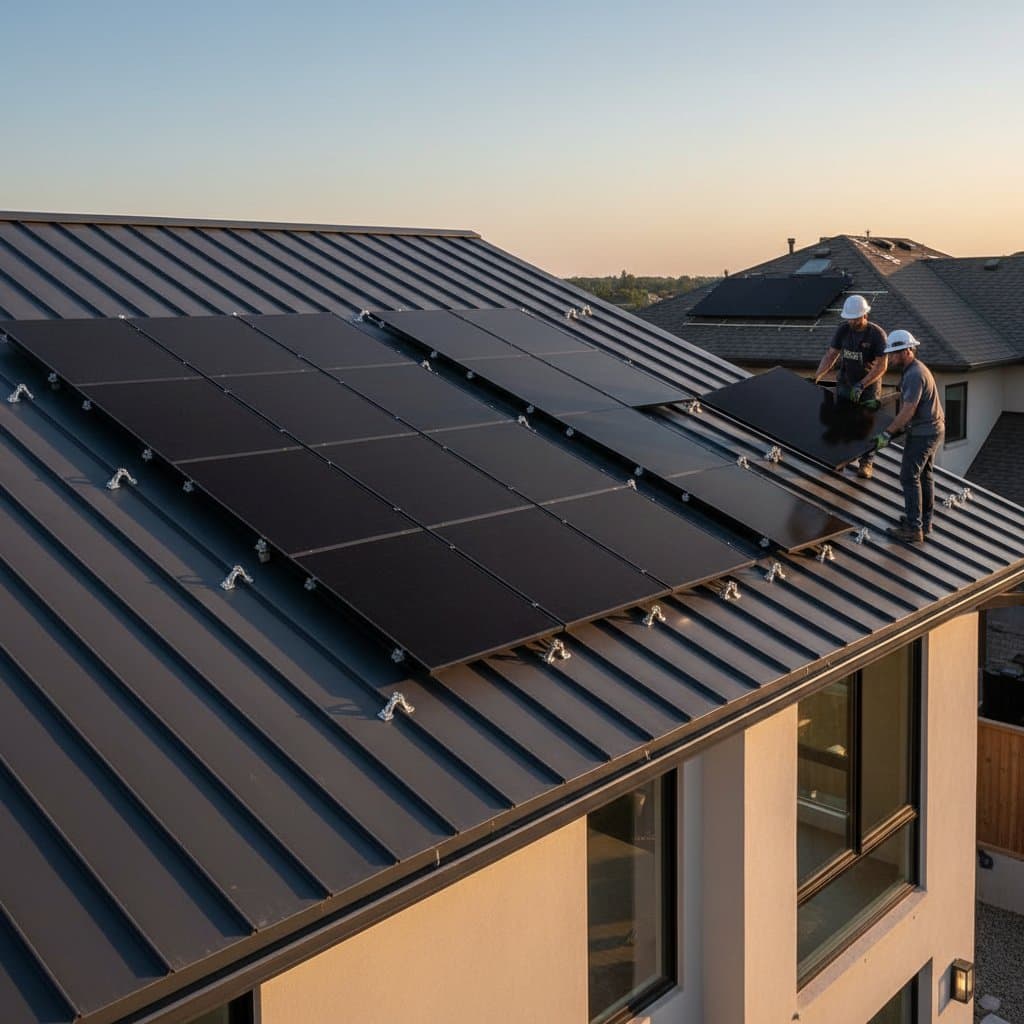
Metal Roofs Reduce Solar Installation Time by 40 Percent Compared to Shingles
The advantage in speed for installing solar panels on metal roofs stands out clearly. In numerous residential and light commercial projects observed, installation teams report that standing seam metal roofs decrease installation times by approximately 40 percent relative to asphalt shingles. This improvement stems from specialized mounting hardware, enhanced labor efficiency, and superior structural compatibility over the long term.
Simplifying Solar Mounting on Metal Roofs
Solar installers face significant challenges when working with asphalt shingles. They must locate rafters, drill pilot holes, and seal each penetration using flashing and sealant. This process demands careful attention and consumes several hours per array. Standing seam metal roofs eliminate much of this effort. The seams serve as built-in anchor points for clamps that attach without penetrating the roof surface. Without penetrations, teams avoid the need for flashing, sealant applications, and associated leak risks.
During a project in the Southeast, a crew chief explained that his team secures rails on a standing seam roof far more quickly than on shingles. He noted, "We clip the mounts on, torque them, and move on. There is almost no cleanup." Such efficiency leads to substantial labor cost reductions, which influence the overall financial viability of solar projects. Installers can complete more work in less time, allowing for broader project scalability.
Enhancing Longevity and Compatibility
Metal roofs earn praise for their extended service life. Quality standing seam panels endure two to three times longer than asphalt shingles, often matching or exceeding the lifespan of the solar system installed atop them. This synchronization avoids the expense of removing and reinstalling panels during roof replacement. Homeowners frequently incur thousands of dollars in costs for such disruptions when shingles fail prematurely beneath a functional solar array. Metal roofs prevent this issue by design.
The pairing of durable roofing with low-maintenance solar systems supports sound financial planning. After installation, both components demand little upkeep. The roof safeguards the panels from environmental stresses, while the panels protect underlying roof areas from direct exposure to rain, UV rays, and debris. This mutual reinforcement extends the effective life of the entire setup, maximizing return on investment.
Ensuring Structural Consistency and Integrity
Engineers design standing seam metal roofs with uniform strength properties. Installers benefit from this predictability during planning and execution. Seams appear at regular intervals, facilitating even load distribution and straightforward array layouts. Asphalt shingle roofs present more variability, including differences in pitch, rafter spacing, and underlying deck conditions, which complicate design and increase on-site adjustments.
Structural reports confirm that clamp systems on standing seam panels achieve more balanced load sharing than traditional lag-bolt methods on shingles. This even distribution minimizes stress concentrations and bolsters overall system reliability. Metal roofs essentially integrate a solar-ready platform into their core structure, streamlining the transition from roofing to energy generation.
To leverage this, property owners should consult certified installers early in the planning phase. They can review site-specific factors, such as roof orientation and wind loads, to confirm compatibility. Selecting panels with at least 24-gauge thickness ensures optimal performance under solar array weights.
Emerging Trends and Installer Insights
Solar professionals increasingly favor mounting systems optimized for metal roofs. Leading manufacturers provide pre-assembled clamps that engage seams with precise torque specifications, reducing setup errors. This evolution addresses not only installation speed but also post-installation issues like callbacks for repairs or warranty disputes. One installer emphasized, "If I can finish faster and avoid leak complaints entirely, that outweighs any initial hardware costs."
Market data reveals a growing link between metal roof popularity and solar innovations. Builders incorporate standing seam designs into new constructions, anticipating future solar additions. This forward-thinking strategy positions the roof as a dual-purpose element: providing shelter while supporting energy infrastructure. Homebuyers gain from this integration, as it future-proofs properties against rising energy demands.
Integrating Solar from the Foundation Up
Opting for a standing seam metal roof extends beyond aesthetics or basic durability. It represents a deliberate choice that eases solar adoption, shortens labor timelines, and minimizes ongoing maintenance needs. For those considering solar energy, evaluating roof options at the outset delivers tangible savings in time, expense, and effort. Begin by assessing current roof conditions or exploring replacement materials that align with long-term energy goals.