
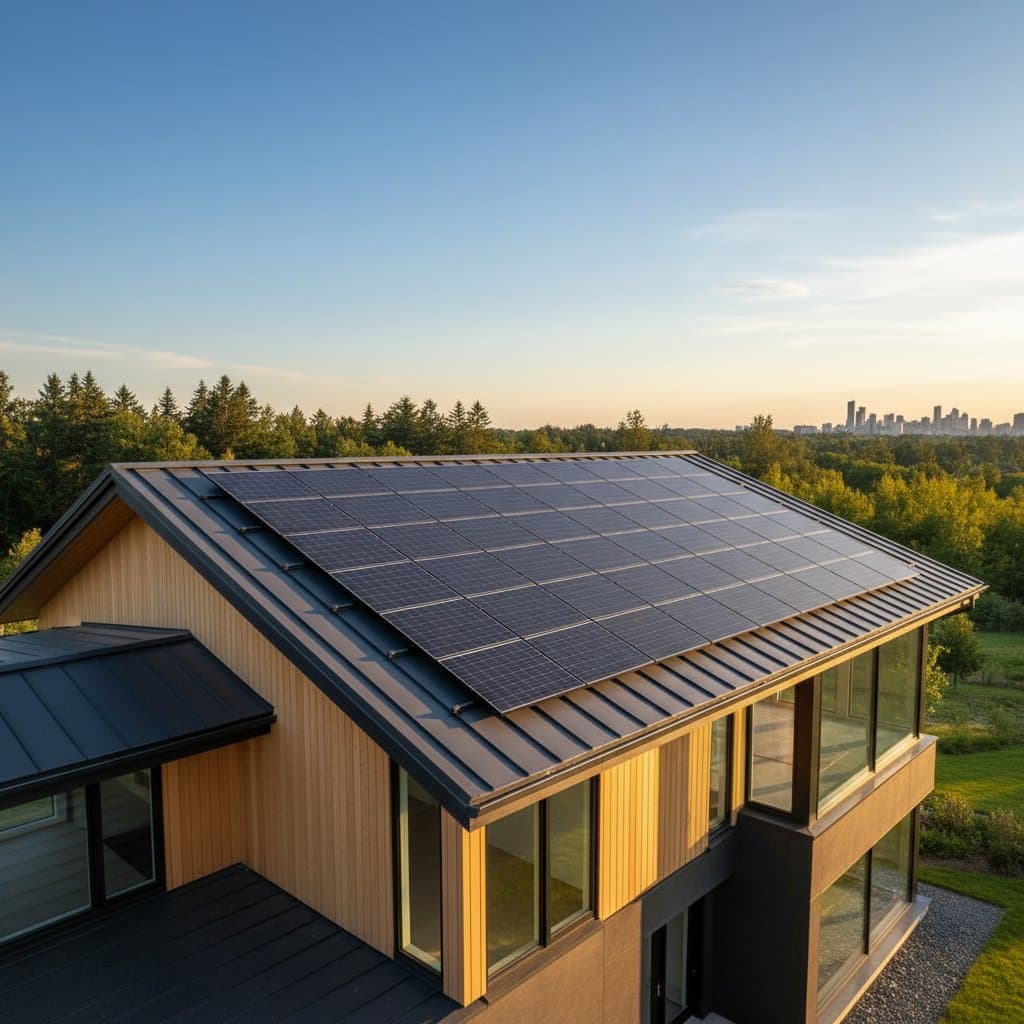
Why Contractors Recommend Solar on Metal Roofs
Solar installers frequently discuss roof compatibility, and metal roofs consistently emerge as a top choice. Professionals experienced with asphalt shingles, tile, and flat membranes express particular enthusiasm for metal. This preference stems from practical, technical, and performance advantages that make the combination highly effective. Based on over a decade of observing solar construction trends, few building integrations match the natural synergy of solar panels and metal roofs.
Aligning Lifespans for Long-Term Reliability
A primary reason for this preference is the alignment of lifespans. Asphalt roofs typically endure twenty to thirty years under optimal conditions, whereas standing seam metal roofs often exceed fifty years. Installing solar panels on shorter-lived roofs requires eventual removal and reinstallation during roof replacement, incurring significant labor, time, and potential damage costs.
Metal roofs address this issue directly. Their extended durability allows panels to remain in place throughout their productive life, typically twenty-five to thirty years. Contractors highlight this benefit to clients, often advising a metal roof upgrade before solar installation if the current roof approaches the end of its service life. This approach minimizes disruptions and maximizes system longevity.
Simplifying Installation and Preventing Leaks
Technical advantages further solidify the appeal. Standing seam metal roofs enable attachment of solar modules via clamp systems that avoid roof penetrations. Installers secure racking to the seams without drilling or using lag bolts and flashing, streamlining the process.
Each penetration on other roof types represents a leak risk, requiring meticulous sealing that may degrade over time. Clamp systems on metal roofs maintain the waterproof barrier intact through mechanical grip alone. This reliability reduces post-installation service calls, warranty challenges, and liability concerns. Many installers report faster project timelines, improved performance, and higher client satisfaction as a result.
Enhancing Structural Integrity and Wind Resistance
Metal roofs provide a robust platform for solar arrays. Interlocking panels and sturdy substructures offer superior stability, particularly in high-wind or storm-prone areas. Properly engineered clamps ensure resistance to uplift forces that could dislodge panels on shingle or tile roofs.
This strength simplifies compliance with building codes, eliminating the need for extra reinforcements or hardware. Contractors experience fewer issues following extreme weather events, which translates to reduced warranty claims. They often market this resilience to clients seeking dependable, low-maintenance energy solutions.
Optimizing Costs Over the System Lifetime
Initial costs for metal roofs exceed those of asphalt shingles, yet the long-term economics favor the combination with solar. The roof's longevity eliminates expenses related to panel removal and reinstallation during future replacements. Clients who consider decades-long ownership find this perspective compelling beyond upfront pricing.
Installation efficiencies contribute as well. Clamp systems require less drilling, fewer supplies, and reduced labor hours, offsetting material expenses. Some contractors bundle metal roofing and solar into unified packages, easing financing and decision-making for homeowners. This integrated approach enhances overall value.
Boosting Energy Efficiency Through Synergy
Mechanical benefits extend to energy output. Metal roofs reflect sunlight effectively, maintaining cooler surface temperatures compared to asphalt. Solar panels perform optimally at lower temperatures, yielding a modest but cumulative efficiency gain over time.
The uniform, smooth profile of standing seam designs facilitates precise panel alignment and spacing. This precision not only elevates visual appeal but also optimizes tilt and orientation for maximum energy capture. Installers value the professional finish this setup enables.
Appealing to Sustainability and Market Demands
Rising awareness of eco-friendly materials influences contractor recommendations. Metal roofs utilize recycled steel or aluminum and remain fully recyclable. Combining this with solar generation forms a strong sustainability narrative for environmentally minded clients.
Installers leverage this story to stand out in competitive markets. They demonstrate how the roof system embodies a durable environmental strategy, from energy production to material lifecycle. Homeowners appreciate roofs designed for solar integration that balance aesthetics and responsibility.
Streamlining Operations for Contractors
Practical advantages benefit installers directly. Standardized, tested mounting systems on metal roofs minimize errors, service needs, and claims. Crew training becomes more straightforward, requiring fewer specialized tools.
This consistency supports efficient operations on slim margins. Projects proceed with predictable structures, uniform seams, and clear attachment points, unlike the variability of tiles or shingles. The reduced uncertainty fosters smoother workflows and higher profitability.
Advancing Roof-Integrated Solar Innovations
Emerging roof-integrated solar technologies amplify the advantages. These solutions incorporate electricity-generating laminates or panels directly into the roofing material, bypassing traditional racking. Metal roofs supply the necessary rigidity and weatherproofing for seamless integration.
Prototype installations feature thin-film solar bonded to standing seams, offering a streamlined appearance without penetrations and reliable decades-long performance. Although currently niche, this integration promises significant growth. Contractors familiar with metal systems position themselves to lead in this evolving field.
Integrating Roofs and Solar for Lasting Benefits
The shift toward metal roofs in solar projects reflects a holistic view of roofs as energy assets. Homeowners preparing for solar should evaluate roof condition; a metal upgrade during replacement prevents future complications and costs.
This pairing delivers enduring harmony in durability, efficiency, and sustainability. Contractors guide clients toward these upgrades, ensuring homes achieve reliable, future-proof energy performance.