
Why Smart Panels Are Mandatory for Solar in Some Cities
A quiet revolution unfolds within the electrical panels of solar-powered homes. In an expanding number of U.S. cities, building departments require homeowners to install smart electrical panels alongside solar or battery storage projects. This requirement moves beyond bureaucracy; it integrates distributed energy systems fully into the grid.
Local ordinances often preview national shifts. Municipalities previously pioneered solar-ready roof mandates. Now, smart panel rules guide load management in residential solar design.
Functions of a Smart Electrical Panel
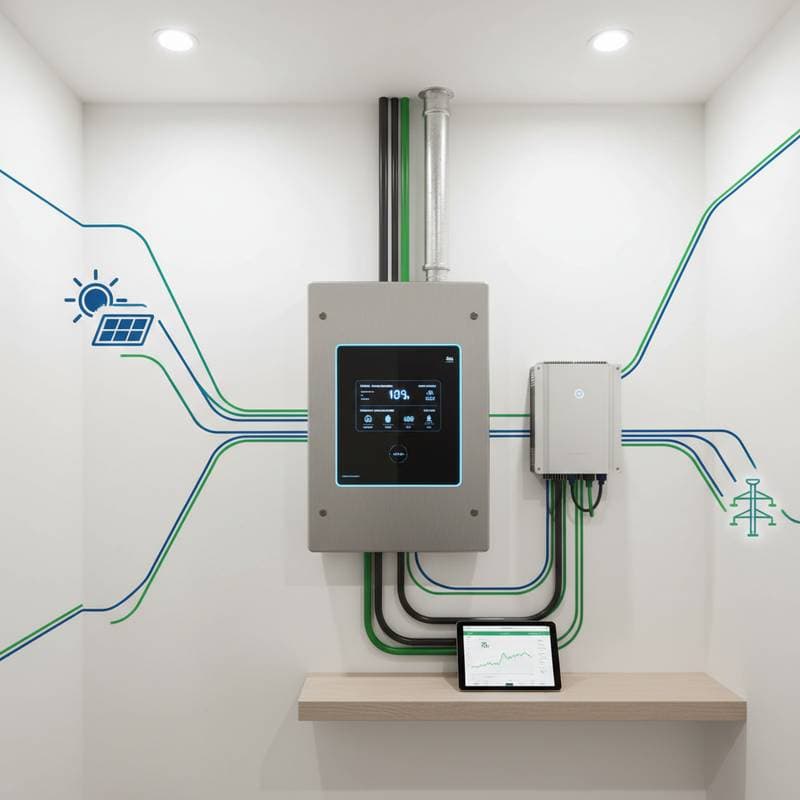
A smart electrical panel replaces or augments a traditional breaker box. It distributes electricity to circuits while adding digital oversight and control. Circuits receive intelligent management via software, allowing remote adjustments, backup power prioritization, and circuit-specific monitoring.
Integrated with solar arrays and batteries, this panel transforms energy handling. It communicates with inverters and storage to optimize solar draw, battery charging, and grid pulls. Responses to pricing or utility signals occur automatically.
Products from Span, Lumin, and Schneider Electric feature cloud controls, mobile apps, and analytics. These elements reshape homeowner interactions with energy systems. They serve as the core operating platforms for distributed energy residences.
Reasons Cities Enforce These Requirements
Mandates arise from grid constraints and rising electrification demands. Unmanaged solar generation strains local networks. Electrification adds loads from electric vehicles, heat pumps, and induction appliances, pushing infrastructure limits.
Building officials select smart panels for home-level solutions. These devices provide load control without utility-scale upgrades. They mitigate peak demands and stabilize grids during high generation or consumption.
Inspectors describe this as future-proofing. Evolving net metering and dynamic rates demand precise system control. Early mandates prevent expensive later modifications.
Building Codes and Policy Influences
Requirements link to updated codes like the California Energy Code and National Electrical Code. These emphasize load management and grid-interactive tools. Local authorities apply them to mandate compliant devices.
Some areas tie incentives to smart features. Rebate programs boost rewards for circuit control or grid responsiveness. This promotes participation in virtual power plants or utility load events.
This echoes solar-ready and EV-ready code adoption. Initial pilots in select cities expanded as costs fell and technology advanced. Smart panels trace a parallel path.
Technical Advantages of Load Management
Solar output varies with weather; home demands shift with usage. Effective balance exceeds basic inverters and panels.
Smart panels orchestrate sources and loads. They charge vehicles during solar peaks and shift to batteries at night. Outages trigger load shedding to preserve runtime. Water heaters adjust to production patterns.
These capabilities bolster grid resilience. Utilities seek flexible assets for demand curtailment or exports. Smart panels enable real-time responses, positioning homes as network nodes.
Advantages for Homeowners
Initial costs concern some, yet users value the insights. Real-time data reveals usage patterns, prompting savings. Outage management simplifies via app-based circuit selection.
For EV or heat pump owners, integration eases. Charging aligns with solar highs or grid lows. Automation matches utility incentives for flexibility.
Compliance evolves into a key installation asset.
Installer Perspectives and Market Effects
Installers debate the rules. Some see added complexity and expense. Others leverage them for premium systems.
Acceptance grows with integration ease. Contractors streamline processes; manufacturers aid with wiring and documentation.
Costs add thousands, but scale reduces prices. Utility payments for grid services will enhance returns.
Role in Energy System Evolution
Smart panels advance energy digitalization. Like telecom and computing, grids become software-driven and connected.
Mandates speed residential integration. New solar setups add intelligence alongside power. This manages vast distributed systems without infrastructure overhauls.
Codes now prioritize operational smarts. Dynamic, communicative homes define the standard.
Adoption Hurdles
Privacy risks and data access raise issues. Utilities doubt communication reliability at scale. Installers note training needs and code variances.
Past standards faced similar issues, resolving through balance. Smart panels will standardize similarly.
Education remains vital. Homeowners need clear explanations of benefits from professionals and officials.
Building Responsive Energy Networks
Mandates redefine home-grid dynamics. Passive flows yield to interactive systems.
Professionals expand into software and automation services. Policymakers gain stability tools without heavy spending.
Solar progress measures management intelligence. These cities pioneer resilient, decentralized grids.