
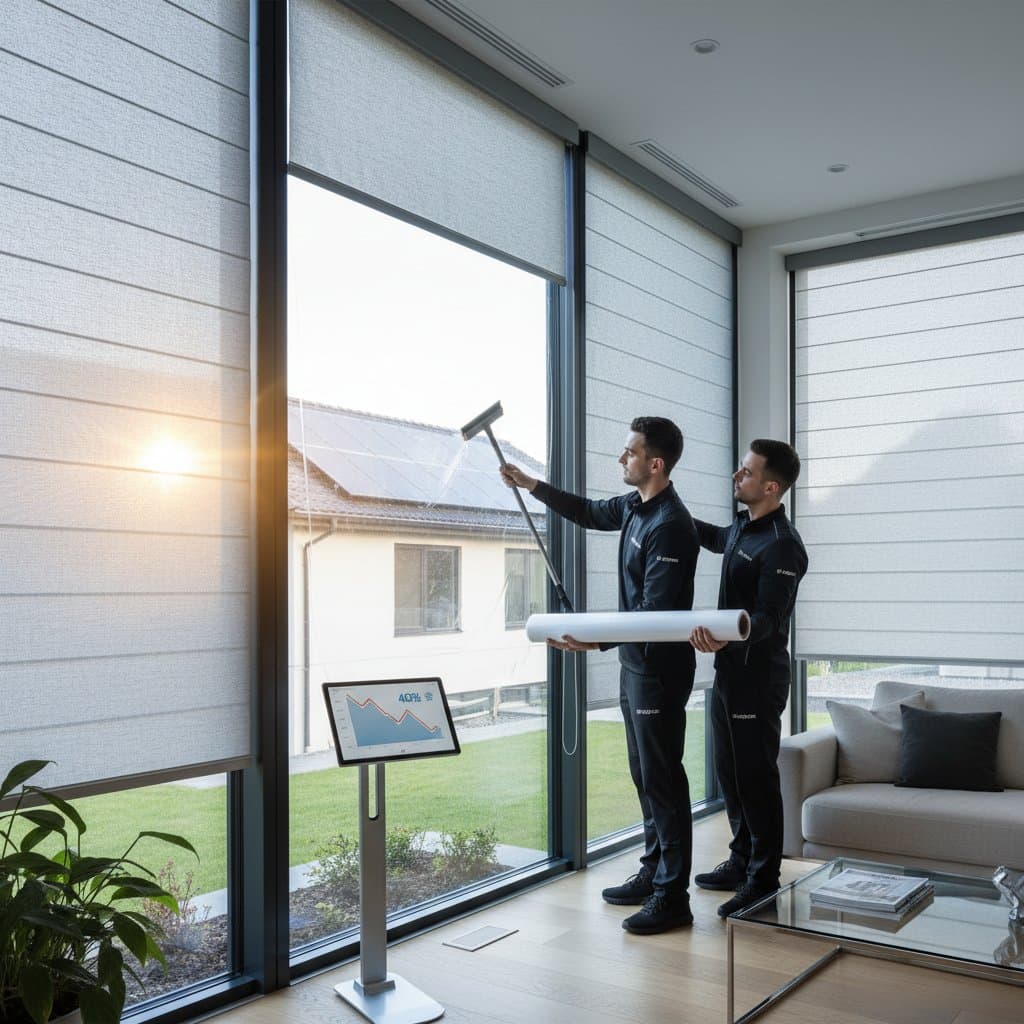
Reduce Air Conditioning Costs by 40 Percent Using Window Film and Smart Shades
Homeowners and small business operators often overlook the significant heat entry through windows. Even efficient heating, ventilation, and air conditioning systems face challenges from untreated glass, which contributes nearly half of thermal gain. Window film and smart shades provide effective solutions to lessen this load. These technologies reduce air conditioning expenses by up to 40 percent, enhance comfort levels, and improve visual appeal.
The Critical Role of Windows in Energy Use
Windows shape the appearance of homes and buildings, yet they serve as primary vulnerabilities for energy loss. Standard double-pane glass performs adequately against cold air infiltration but falters against solar heat gain. Sunlight penetrates the glass, absorbs into interior materials, and re-emits as heat, forcing cooling systems to compensate continuously.
Energy auditors and facility managers nationwide confirm that untreated windows rank as the most neglected inefficiency source. The advantage lies in addressing this issue simply, without the need for full window replacement.
How Window Film Functions Scientifically
Contemporary window films consist of layered polyester with metalized coatings that reflect infrared and ultraviolet radiation. These materials block up to 80 percent of solar heat gain, varying by product specifications. Additionally, they shield against UV rays that cause fading in furnishings, floors, and artwork.
Installation involves a professional applying the film to the interior glass surface. After curing, the film integrates seamlessly and remains nearly undetectable. Interior views and daylight persist, while heat transmission decreases substantially.
Options include:
- Reflective films that redirect sunlight externally
- Spectrally selective films that isolate particular heat and light wavelengths
- Neutral films that preserve a clear glass aesthetic without shine
Selection hinges on regional climate, window direction, and design goals. Commercial properties frequently select spectrally selective films to comply with energy regulations while maintaining exterior aesthetics. Homeowners often choose neutral variants to retain the original glass appearance.
Advancements in Smart Shades
Window film provides static solar management, whereas smart shades enable dynamic responses. These motorized coverings connect to light sensors, thermostats, or smartphone applications. They adjust positions automatically according to sunlight strength or temperature thresholds. For instance, shades descend on west-facing windows during peak afternoon sun and retract as light diminishes.
Developments in smart shades have accelerated recently. Initial models demanded high costs and complex electrical setups. Current versions rely on rechargeable batteries and support remote or voice activation. Compatibility with smart home platforms allows synchronization with cooling routines.
Integrating Film and Shades for Optimal Results
Each technology yields independent benefits, but their combination forms a comprehensive barrier to heat ingress. Window film repels and captures incoming solar energy prior to room entry. Smart shades then manage residual light and warmth, fine-tuning conditions without excessive air conditioning dependence.
Reviewed energy simulations indicate that this pairing lowers cooling demands by 30 to 40 percent in areas with direct sun exposure. Indoor temperatures stabilize, air conditioning units operate less frequently, and equipment durability increases. Homeowners experience reduced bills and greater ease, while businesses realize substantial annual savings.
Key Factors and Installation Guidance
Evaluate building specifics before implementing these upgrades to ensure suitability.
- Analyze window directions. South- and west-oriented panes gain the most from film or shade applications.
- Review existing glass properties. Low-emissivity coatings already mitigate some heat; films amplify their effectiveness.
- Verify warranty terms. Certain manufacturers invalidate coverage for added films; engage certified professionals familiar with restrictions.
- Design automation sequences. Program smart shades to match heating, ventilation, and air conditioning operations or natural light cycles.
Return on investment typically occurs within two to three summer periods. Costs remain modest relative to enduring energy reductions and enhanced livability.
Advantages for Comfort Exceeding Financial Gains
Utility savings represent only part of the value. Window films diminish glare, aiding focus for remote workers and screen users. They provide daytime privacy without dimming rooms. Smart shades offer comparable control, enabling precise adjustments to illumination and mood.
Air quality benefits emerge as well. Decreased solar heat reduces heating, ventilation, and air conditioning cycles, stabilizing humidity and limiting dust redistribution via ducts. These changes create a more pleasant environment overall.
Broader Impacts on Environment and Locality
Lowering cooling needs decreases carbon outputs. Each conserved kilowatt-hour eases grid pressure during summer peaks. Widespread adoption across residences and enterprises can postpone new power infrastructure development. This contributes quietly to regional energy stability.
Coverage of solar and efficiency innovations reveals how such targeted actions accumulate. Major shifts in energy use begin with accessible household initiatives. Window films and smart shades deliver tangible advancements in sustainable construction practices.
Steps to Implement Window Optimizations
Building managers seeking economical energy controls often prioritize solar installations or system overhauls. Window enhancements prove equally impactful. Begin with a professional assessment of current setups. Certified installers and shade providers offer simulations to forecast savings. Technologies mature reliably, processes streamline easily, and outcomes manifest promptly.