
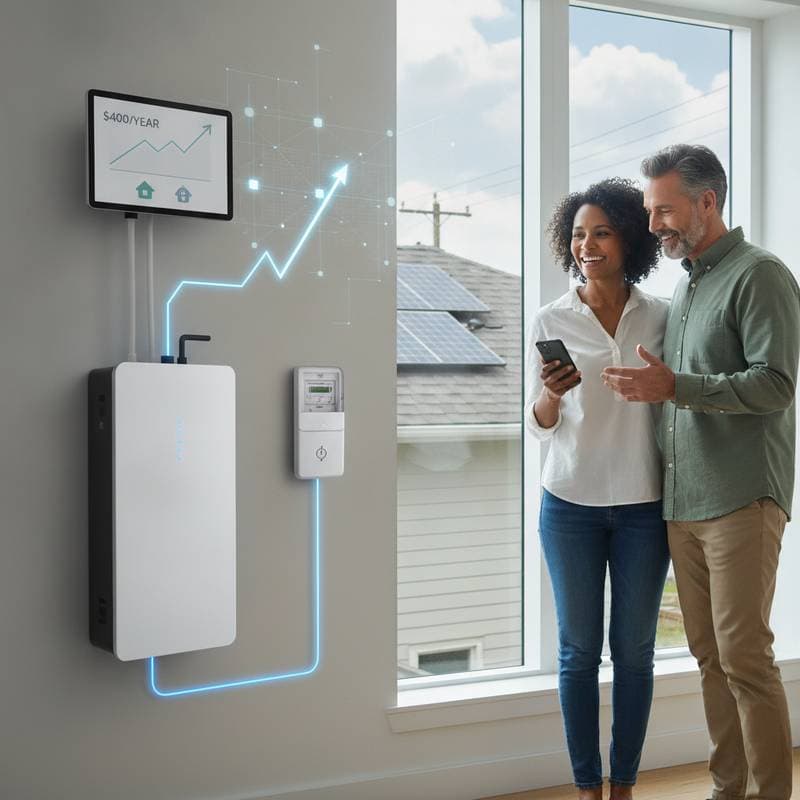
Earn $400 Per Year Renting Your Battery to the Grid
Homeowners with solar and battery systems can now earn steady income by allowing utilities or energy aggregators to use stored power when the grid needs extra support. This growing model, known as a virtual power plant, connects distributed batteries into a digital network that functions like a large power plant. By participating, households can receive direct payments or credits worth about $400 per year, depending on system size, usage, and program design.
How Virtual Power Plants Work
A virtual power plant combines many small-scale energy resources such as residential batteries, rooftop solar systems, and smart inverters. Through secure software, these devices are aggregated and managed as a single energy asset. When the grid experiences high demand or unexpected outages, the operator can draw on the collective stored energy.
Each participating battery provides a small amount of power, but together they supply meaningful capacity that stabilizes the grid. The VPP operator coordinates energy flows automatically. Participants do not need to adjust their system manually. The software monitors grid conditions, communicates with each device, and releases stored electricity only when needed.
Why Homeowners Are Joining
For many solar system owners, joining a virtual power plant provides new financial value from an existing investment. Residential battery systems often sit partially charged for long periods. By renting unused capacity to the grid, owners can earn extra money while maintaining backup power for their own needs.
The typical payment structure offers around $400 annually, though some programs use bill credits instead of direct cash. Other benefits include improved grid reliability and reduced dependence on fossil fuel generation. When distributed batteries supply power during peak demand, utilities avoid starting costly gas peaker plants.
How Participation Works
Enrollment usually starts with an approved installer or program partner. Homeowners register their battery through an online portal, linking it to the aggregator network. The system must meet specific requirements such as at least 5 kWh of usable capacity and compatible communication software.
Once connected, the operator manages dispatch events automatically. Participants can set preferences for how much of their battery is available for grid use. For example, a homeowner may reserve 30 percent of capacity for personal backup and lease the remaining 70 percent to the grid.
Programs vary in structure. Some offer guaranteed annual payments, while others pay based on actual energy delivered. A few combine both models to balance performance and predictability. Payments are typically issued through direct deposit or credited on monthly utility bills.
Key Players and Program Examples
Utilities, technology firms, and clean energy companies are expanding VPP programs across several regions. Some utilities operate their own programs to manage local grid reliability. Others partner with third-party operators that specialize in aggregation and software management.
Independent aggregators play a growing role by connecting batteries from different brands into one coordinated system. Their platforms handle communication protocols, data security, and performance tracking. This interoperability allows homeowners to join even if their battery brand differs from others in the network.
Technical and Policy Context
Virtual power plants depend on advanced communication standards and grid service markets that reward flexibility. In many regions, regulatory bodies have introduced frameworks that allow distributed energy resources to participate in wholesale markets. This inclusion enables batteries to earn revenue from frequency regulation, demand response, and capacity support.
From a technical standpoint, VPPs rely on real-time telemetry and software algorithms to balance supply and demand. Each battery responds to control signals within seconds, helping maintain voltage and frequency stability. The system reliability depends on accurate forecasting, secure connectivity, and consistent performance verification.
Financial Considerations
Before joining a virtual power plant, homeowners should review contract terms carefully. Key factors include payment structure, participation duration, and control limits. Some programs require a fixed commitment period, while others allow flexible withdrawal.
Battery wear is another consideration. Frequent dispatch cycles can affect long-term performance, though most programs limit discharge depth to protect hardware. Manufacturers often support VPP participation, and warranties may remain valid when using approved software.
The expected $400 annual income may vary with battery capacity, local incentives, and program rules. In regions with frequent grid events or higher compensation rates, earnings could exceed this figure. Even modest payments, combined with energy savings from solar self-consumption, improve overall system economics.
Broader Industry Impact
The expansion of virtual power plants is influencing how utilities plan for reliability and capacity. Instead of building new centralized power plants, they can access distributed energy stored across thousands of homes. This approach lowers infrastructure costs and accelerates renewable integration.
As more households install solar-plus-storage systems, the aggregated potential grows significantly. A network of ten thousand home batteries could provide hundreds of megawatt-hours of flexible capacity. This scale of distributed support helps balance intermittent renewable generation and reduces peak load stress.
Unlocking Value from Your Battery
Renting battery capacity to the grid reflects a broader movement toward energy sharing and community-based power models. Virtual power plants transform individual systems into collective resources that strengthen grid stability and reward participation. Homeowners gain a new revenue stream while contributing to cleaner and more resilient energy infrastructure.
For those already equipped with solar and storage, joining a program requires minimal effort. It turns existing capacity into an active financial asset. By connecting personal energy storage to a shared network, homeowners earn reliable income while helping the grid operate more efficiently.