
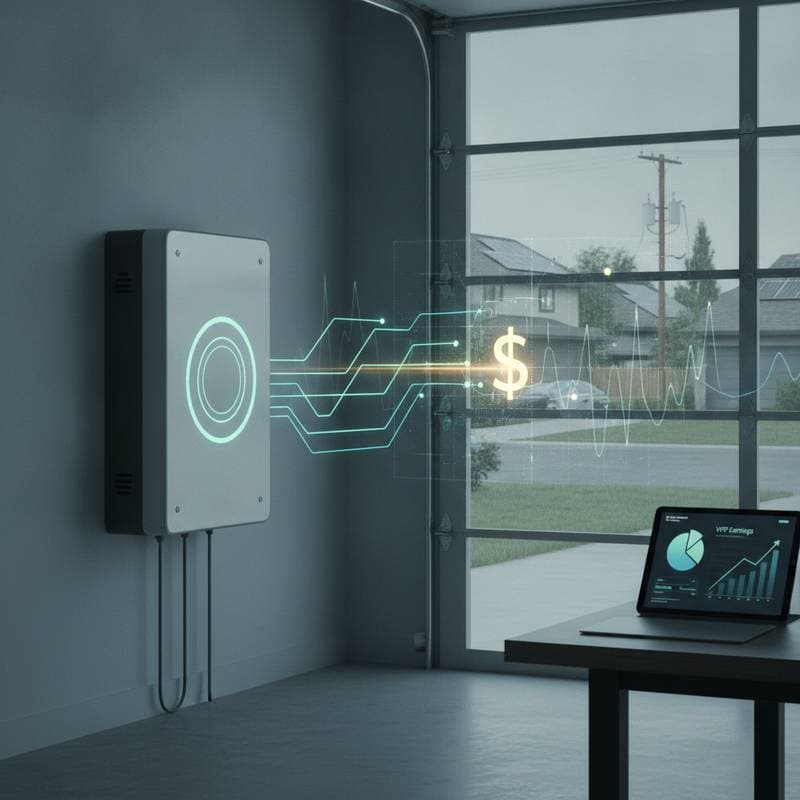
Rent Your Battery for $400 a Year in Virtual Power Plants
A quiet shift is underway in the solar and storage sector. Energy storage systems now earn money by participating in grid services in addition to protecting homeowners from high utility rates. The concept is known as a Virtual Power Plant. It is beginning to change how distributed energy resources connect with the larger electricity network.
Homeowners can rent battery capacity to the grid and receive roughly 400 dollars each year. Actual earnings depend on network agreements, utility tariffs, aggregation software, and market rules. The broader trend is clear. The grid now places value on flexibility, which turns residential batteries into income producing assets.
What a Virtual Power Plant Does
A Virtual Power Plant is a networked group of distributed energy resources. These resources include rooftop solar, home batteries, smart thermostats, and electric vehicle chargers. A digital platform coordinates the assets and communicates with the local utility or regional transmission operator.
When the grid requires support to manage demand spikes, stabilize frequency, or cover supply gaps, the operator can draw power from many connected systems at once. Grid operators see the combined output as one large power plant even though the devices are spread across many locations.
Cloud based control platforms, standard communication protocols, and improved inverters have made these networks reliable. A managed Virtual Power Plant now acts as a responsive participant in power markets.
How Battery Rentals Improve Homeowner Economics
Batteries have long been viewed mainly as backup systems or tools for managing time of use rates. Payback periods remained long even after battery prices fell and incentives appeared. Virtual Power Plant participation alters the calculation.
Homeowners grant an aggregator limited access to battery capacity during grid events. In exchange they receive payments, bill credits, or performance compensation. The commonly cited figure of 400 dollars per year reflects current program structures in active markets.
Earnings vary with battery size and availability, program design, local grid conditions, and aggregation efficiency. Larger batteries that remain available during peak periods generate higher returns. Some utilities offer fixed stipends while others tie pay to measured performance.
How Dispatch Works in Practice
Dispatch events are typically short and limited to specific grid needs. Control software maintains a reserve so homeowners retain backup power for personal use. Communication occurs through the inverter or an energy management gateway that reports state of charge and available capacity.
Many programs allow homeowners to opt out of individual events. Some platforms let users adjust availability by season or time of day to match higher compensation rates. Several battery brands now include open APIs that simplify enrollment without extra hardware.
Policy Changes That Enabled These Programs
Utilities once treated rooftop solar and home batteries as potential problems for grid stability. Regulators later recognized that coordinated resources could support reliability instead. New frameworks allow aggregated systems to bid into wholesale markets for demand response and ancillary services.
Pilot programs demonstrated that even modest numbers of batteries could reduce peak demand and defer infrastructure upgrades. Those results encouraged additional programs across multiple states, each testing different payment structures.
Payment Structures Homeowners Encounter
Aggregators currently use several approaches to compensate participants. Fixed annual payments provide predictable income for allowing access under defined conditions. Performance based payments tie earnings to energy delivered during events. Bill credits reduce electricity costs directly. Revenue sharing arrangements pass a portion of market earnings to the homeowner.
Fixed payments remain the simplest option for most households. Performance models can produce higher returns but introduce more variability.
Software That Coordinates Thousands of Systems
Sophisticated algorithms forecast demand, predict solar output, and schedule dispatch across many assets. Predictive analytics combine weather data, consumption patterns, and market signals to plan operations hours ahead. Standardized protocols have reduced the need for custom gateways, allowing new battery owners to join networks more easily.
Utility Interest and Grid Benefits
Utilities now view aggregated storage as a way to meet reliability requirements without constructing new peaker plants. Contracting with a Virtual Power Plant aggregator supplies flexible capacity during high demand periods while supporting clean energy goals. This partnership changes how distributed resources are valued on the system.
Practical Limits and Protections
Participants sometimes worry about loss of control or reduced backup power. Programs address these issues with clear opt out options and minimum reserve requirements. Data privacy protections include anonymization and encryption of usage information. Most programs limit dispatch frequency to control battery wear and set compensation above expected degradation costs. Homeowners should review warranty terms before enrolling.
Steps to Participate
Owners of existing battery systems should first confirm hardware compatibility with programs in their region. Manufacturer websites list approved aggregators and utility partners. Enrollment requires signing an agreement that defines dispatch conditions and compensation terms. After setup, the aggregator manages coordination while the homeowner retains ownership and primary use of the battery.
Expanding Opportunities Ahead
Compensation levels are expected to rise as markets mature and grid services gain value. Dynamic pricing experiments increase payments during extreme events. Integration of electric vehicles through vehicle to grid technology will add substantial dispatchable capacity. Continued regulatory support for aggregated resources in wholesale markets will determine how quickly these programs expand nationwide.