
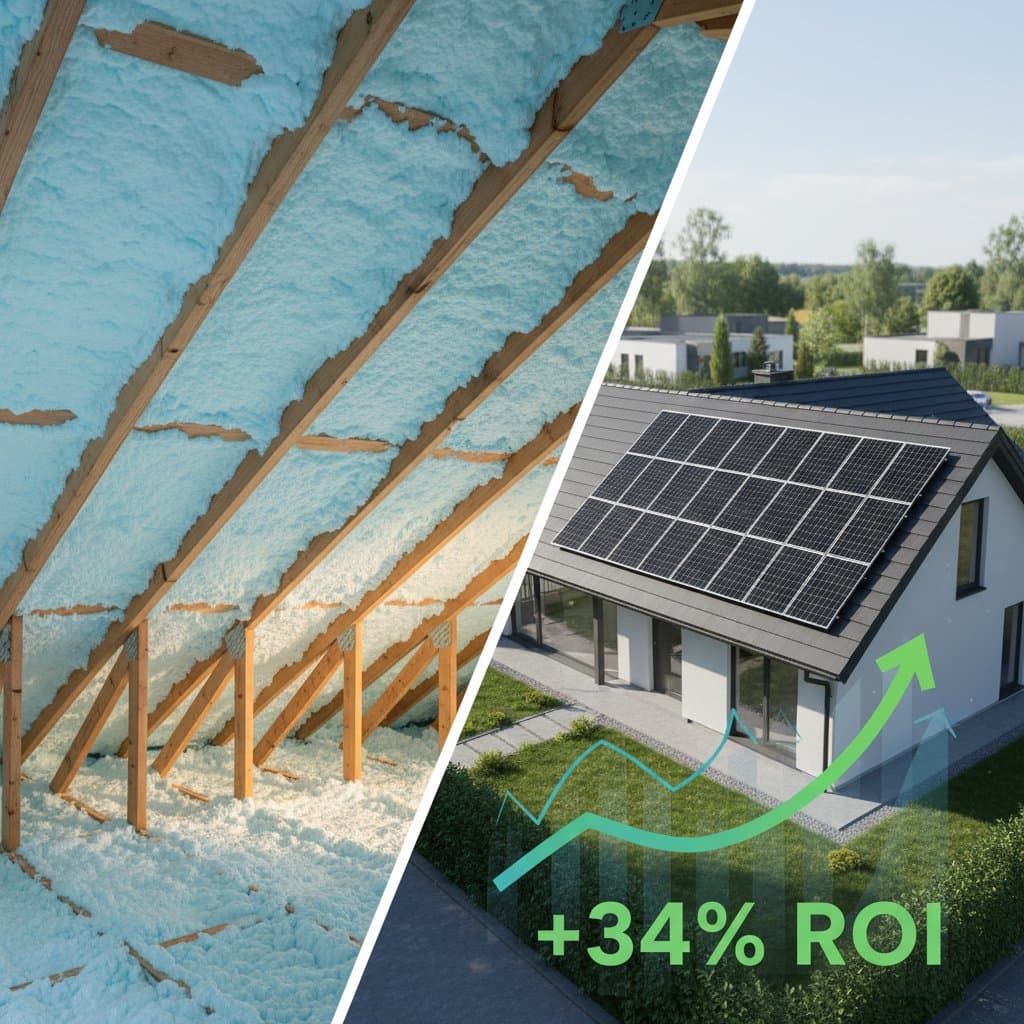
Combining Spray Foam Insulation and Solar Panels: Achieve a 34% ROI Boost
Homeowners and contractors discover enhanced financial outcomes by integrating solar panels with spray foam attic insulation. This approach surpasses the benefits of implementing either upgrade independently. It elevates overall energy efficiency, maximizes long-term savings, and optimizes system performance. Recent data from residential energy audits indicate that coordinated installation can increase solar investment returns by up to 34 percent.
The Synergy Behind the Combination
Solar panels diminish dependence on grid electricity, whereas spray foam insulation retains conditioned air within the home. Together, they form a cohesive system where energy generation and preservation mutually enhance one another. Unsealed attics often contribute significantly to heat gain or loss through air leakage. Advanced photovoltaic systems alone cannot fully counteract energy waste stemming from inadequate insulation.
Spray foam seals gaps and establishes a continuous thermal barrier. It mitigates attic heat accumulation during summer and curbs heat escape in winter. Consequently, HVAC systems face reduced demands, energy use declines, and solar output aligns more effectively with household needs. Homeowners realize quicker payback periods and superior long-term investment returns as a result.
Essential Performance Improvements
Studies on energy efficiency reveal substantial decreases in heating and cooling requirements for homes equipped with spray foam insulation. Pairing these reductions with solar power generation yields total energy cost savings exceeding one-third relative to homes using conventional insulation methods.
Three primary mechanisms drive this enhancement:
- Enhanced Energy Retention: Spray foam creates an airtight seal that halts the escape of conditioned air. This lowers the demand for heating or cooling, enabling solar power to offset a larger portion of the overall energy load.
- Consistent Indoor Temperatures: Residences sustain steady temperatures across daily cycles, which reduces HVAC operation frequency and prolongs equipment durability.
- Superior Solar Module Efficiency: Cooler attics maintain rooftop solar panels nearer to optimal operating conditions, thereby boosting output and extending service life.
Reduced Utility Expenses and Accelerated Payback
The integration of spray foam and solar shortens the payback duration for renewable energy installations by multiple years. Solar panels directly lower electricity bills, while insulation addresses demand reduction. This synergy compounds savings and augments property worth.
Consider a standard residence with a medium-scale solar setup offsetting 60 percent of electricity needs. Adding spray foam insulation can elevate that coverage to 80 percent or higher, influenced by local climate and architectural features. Such improvements lead to diminished monthly payments and amplified cumulative financial benefits.
Practical Installation Guidelines
Contractors benefit from strategic coordination between insulation and solar projects, yielding reliable outcomes. Adhering to established protocols ensures peak functionality:
- Assess Attic Integrity Initially: Prior to solar placement, inspect ventilation, moisture content, and existing insulation thickness. Confirm dryness and structural integrity of the roof deck and rafters before applying spray foam.
- Select Closed-Cell Foam for Optimal Results: This variant delivers the greatest R-value per inch and reinforces roof structure. It functions as both an air and vapor barrier to avert condensation problems.
- Prioritize Installation Sequence: Complete spray foam application ahead of mounting solar hardware. This avoids contamination of panels and guarantees comprehensive attic coverage.
- Integrate Electrical Design Thoughtfully: Account for potential impacts on wiring or conduit paths from insulation. Position electrical elements to facilitate ongoing access for servicing.
Treating these upgrades as interconnected components of a broader energy initiative minimizes overlapping efforts and produces exceptional performance.
Influences of Regional and Climatic Variations
Benefits from merging spray foam insulation and solar adapt to local conditions, yet core advantages persist universally. In warmer areas, spray foam limits heat infiltration into attics, cooling living areas and easing air conditioning loads. In cooler zones, it retains interior warmth against roof losses, curbing heating expenditures.
Geographic differences affect solar yield, but insulation amplifies the utility of each generated kilowatt-hour. Substantial efficiency improvements arise even in areas with average sunlight exposure through lowered consumption. Frequently, these upgrades align with local rebate programs for energy conservation, enhancing economic viability.
Broader Environmental and Comfort Benefits
This pairing extends value beyond economics to tangible ecological and livability gains. Decreased energy needs translate to lower carbon outputs, while uniform temperatures elevate daily comfort. Spray foam's seal excludes external contaminants, dust, and allergens from indoor spaces.
For sustainability-focused families, the duo stands as a premier method to curtail overall energy reliance without sacrificing ease or visual appeal. Solar provides renewable generation, and spray foam maximizes its effective use.
Sustaining Value Through Maintenance
Post-installation, both technologies demand limited upkeep. Solar systems require routine cleaning and checks, whereas spray foam endures for decades with negligible intervention. This durability aligns with the extended lifespan of contemporary solar installations, forming a dependable, low-effort savings mechanism.
Appraisers now value energy-efficient attributes highly, especially alongside renewables. An insulated attic combined with solar elevates market price beyond initial outlays, particularly amid escalating energy rates.
Steps to Implement This Upgrade
Homeowners eyeing solar installations should incorporate spray foam concurrently or beforehand for optimal fiscal impact. Contractors bundling these services streamline projects and heighten client approval.
Initiate with a professional energy audit to pinpoint inefficiencies and roof suitability. Engage certified specialists for insulation and solar work, ensuring compliance with codes and material standards. This integrated strategy not only curbs waste but also fosters system harmony, yielding concrete fiscal and ecological rewards.