
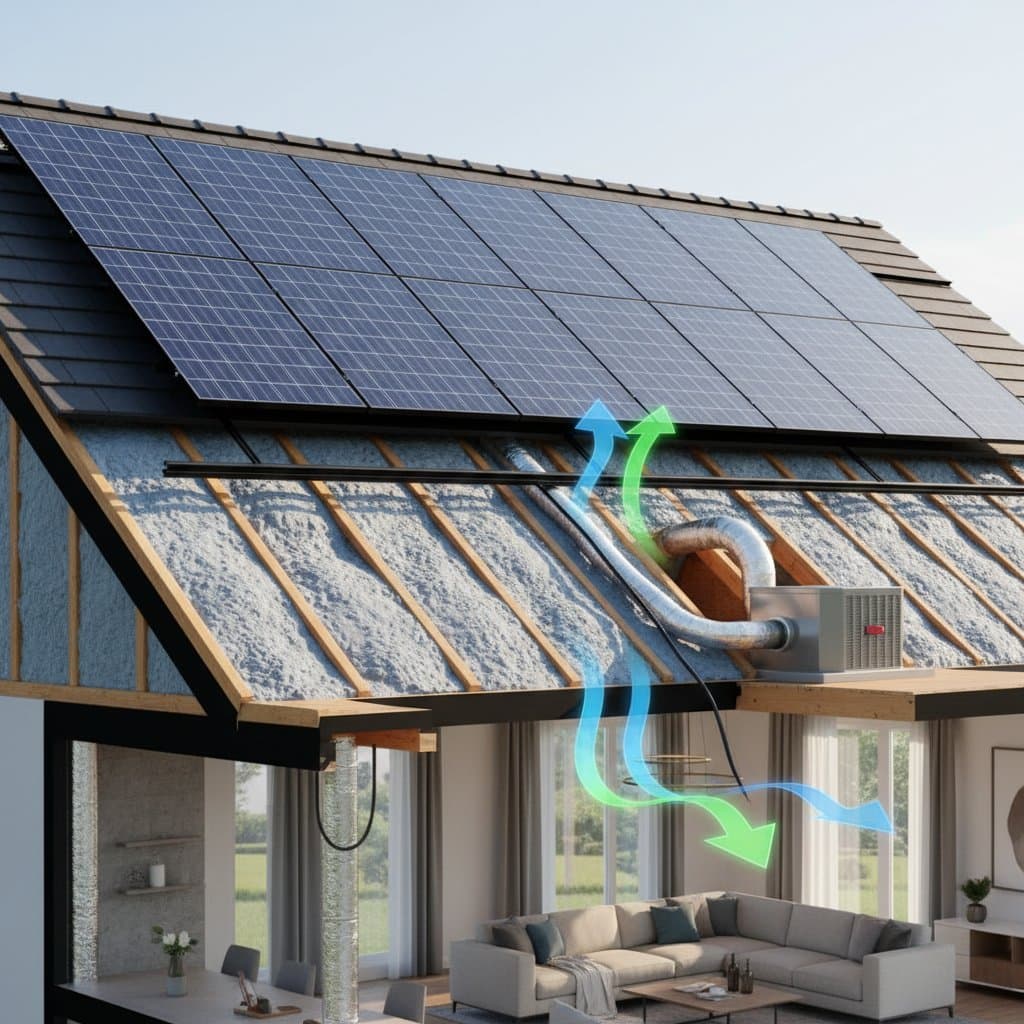
Attic Insulation and Solar Panels: Achieving Double Energy Savings
Homeowners can substantially lower energy costs and elevate living comfort by integrating solar panels with improved attic insulation. Individually, each upgrade yields notable benefits, yet their combination fosters a synergistic effect that optimizes whole-home efficiency. This pairing stabilizes indoor temperatures, eases the burden on heating and cooling systems, and yields enduring environmental and economic gains for those committed to sustainable practices.
Enhancing Solar Efficiency Through Attic Insulation
Solar panel output relies on steady performance, affected by roof temperatures and household energy demands. Inadequate attic insulation permits heat loss during winter and heat infiltration in summer, compelling HVAC systems to overwork and consume more electricity. This heightened demand can diminish the net gains from solar panels. Effective insulation moderates indoor climates, enabling solar-generated power to cover a greater share of home requirements.
An insulated attic serves as a thermal shield separating living areas from external conditions. Options such as fiberglass batts, blown-in cellulose, or spray foam vary in thermal resistance, quantified by R-value. Higher R-values, like R-38 or R-49 recommended for many climates, curtail heat transfer more effectively. Proper installation seals the attic, curbing roof heat escape and summer warmth entry, which results in a more even home temperature and lower electricity needs for climate regulation, thereby amplifying solar panel value.
Balancing Energy Use and Solar Production
Solar installations produce electricity, but their financial returns hinge on efficient consumption. Homes with elevated energy needs might still draw from the grid despite comprehensive solar setups. Upgrading attic insulation slashes climate control electricity demands, directing more solar output to essentials like appliances and lighting instead of offsetting losses.
During winter months, insulation retains warmth, reducing furnace or heat pump cycles. In summer, it blocks heat ingress, allowing air conditioners to sustain coolness with less runtime. Such consumption cuts yield a load reduction advantage, as experts describe it, fostering greater home energy independence, steeper utility bill reductions, and extended HVAC durability from lighter usage.
Assessing Attic Readiness Prior to Solar Installation
Homeowners should evaluate attic conditions early to uncover enhancement opportunities before solar deployment. Energy audits, often suggested by roofing and solar specialists, pinpoint air leaks, insufficient insulation, and moisture risks. Resolving these beforehand guarantees that the roof and attic adequately underpin both insulation and solar systems.
A sealed, insulated attic keeps roof surfaces cooler, aiding solar panel efficacy. Panels function optimally below 77 degrees Fahrenheit, so mitigating roof heat accumulation boosts energy yield. Thus, attic insulation not only preserves indoor energy but also elevates the solar array's productivity mounted overhead.
Selecting Insulation Materials and Installation Methods
Insulation choices hinge on budget, regional climate, and home structure, each contributing distinctly to solar-insulation synergy.
Fiberglass batt insulation offers cost-effectiveness and straightforward placement between joists and rafters for uniform thermal barriers. Optimal results require thorough air sealing to eliminate drafts, enhancing its compatibility with solar systems.
Blown-in cellulose, derived from recycled paper, delivers dense, gap-filling coverage across uneven attic floors. This eco-friendly option ensures even distribution, bolstering thermal consistency and aligning with sustainability objectives.
Spray foam insulation excels in airtight sealing and superior R-value per inch, expanding to seal fissures against air and moisture. Though pricier, it markedly boosts home efficiency, accelerating solar investment payback.
Alongside material selection, prioritize attic ventilation during upgrades preceding solar work. Adequate airflow, via soffit and ridge vents, averts condensation and upholds roof integrity, safeguarding solar mountings long-term.
Unlocking Financial Benefits and Investment Returns
Merging attic insulation with solar unlocks layered incentives. Solar setups frequently access federal tax credits like the 30% Investment Tax Credit, while insulation qualifies for efficiency rebates from utilities or states. Coordinating projects maximizes these offsets, trimming upfront expenses.
Savings accumulate progressively. Insulation often recoups costs in three to five years via heating and cooling reductions. Coupled with solar, utility savings accelerate, permitting smaller arrays to suffice or larger ones to yield net metering credits.
For resale value, this duo appeals to eco-conscious buyers. Verified efficient, renewable homes command higher prices in competitive markets, transforming upgrades into assets.
Observing Real-World Outcomes and Everyday Advantages
Those adopting attic insulation alongside solar report swift comfort enhancements. Temperatures even out, eliminating hot or cold spots in rooms. Insulation also dampens external and internal noises, enriching daily living.
Maintenance benefits include moisture control, curbing mold, rot, and roof wear. This preserves structural health, indirectly shielding solar components.
Technically, the integration refines the building envelope. Lower energy use, on-site generation, and stable thermals reduce equipment strain, exemplifying efficient design without major overhauls.
Coordinating Contractors for Optimal Implementation
Seamless results demand collaboration between insulation and solar professionals, both engaging roof-adjacent work. Sequence insulation first to complete sealing and ventilation, avoiding later solar disruptions.
Clear dialogue addresses reinforcements, like rafter bracing or vent additions, ensuring safety. Integrated service providers simplify logistics, often with performance warranties.
Choose certified experts: insulation crews versed in local codes, solar teams accredited by bodies like NABCEP. Qualified partnerships guarantee reliable operation and upheld warranties.
Advancing Whole-Home Energy Optimization
This insulation-solar pairing advances proactive energy strategies, tackling production and conservation simultaneously. It trims ongoing costs, ensures comfort, and bolsters property resilience.
Incorporate attic reviews into solar planning from the outset. Pre-installation upgrades prevent energy waste, unlocking full solar potential. For existing solar owners, attic enhancements amplify current benefits.
Such targeted improvements yield tangible efficiency, blending generation and retention for sustained home performance.